
Last Updated: August 6, 2026
Garage Door Safety Inspection in Berkeley, CA
A safety inspection finds the worn spring, frayed cable, or dead sensor before it finds you. Santos & Sons runs a 25-point safety inspection on doors across Berkeley and the Bay Area, with same-day appointments available.
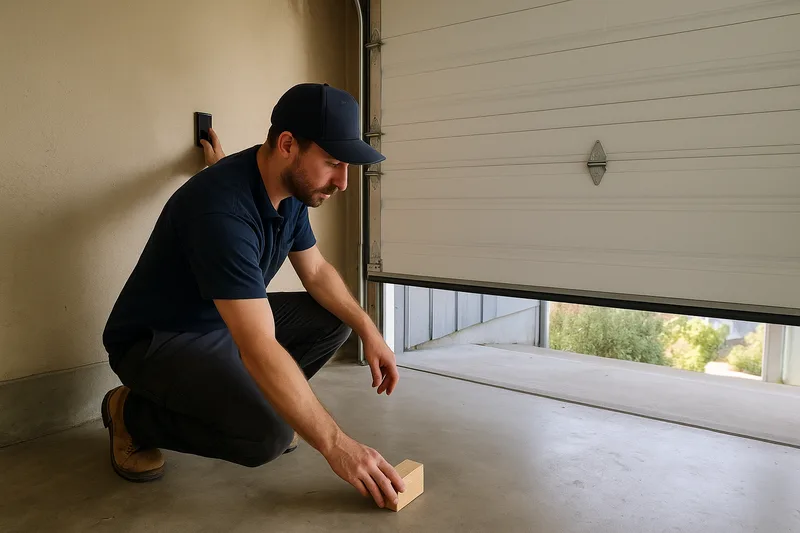
25-point safety inspection including sensor alignment and force testing
How Much Does a Garage Door Safety Inspection Cost?
| Service | Price | Details |
|---|---|---|
| Basic Safety Inspection | $79–$99 | Visual inspection of springs, cables, sensors, and hardware with verbal findings report |
| Full 25-Point Inspection | $99–$149 | Full hands-on testing of all safety systems with detailed written report and photos |
| Inspection + Tune-Up Bundle | $149–$199 | Complete safety inspection plus lubrication, adjustment, and minor corrections included |
| Post-Installation Safety Check | Included free | Complimentary safety verification after any Santos & Sons installation or major repair |
Every inspection ends with a plain-language explanation of what was found. Any recommended repair comes with its own written price, and the decision to do it stays with you. Schedule by calling (650) 750-7029 or booking online.
Our 25-Point Safety Inspection Checklist
The tech works through the same 25 points on every door. Each one gets tested, measured, or examined, and documented in your written report.
- The springs, checked for rust, deformation, coil gaps, and correct tension. This is the most dangerous part on the door, so it goes first.
- The lift cables, along their full length, for fraying, kinks, corrosion, and wear spots.
- The tracks, verified plumb, level, and properly spaced so the door can't bind or derail.
- Each roller, for cracks, flat spots, wobble, and bearing wear.
- Every mounting bracket, tested for looseness, cracks, and wall anchor failure.
- The bottom weather seal, for tears, flattening, and gaps.
- The side and top weatherstripping, for deterioration.
- The auto-reverse: a test object goes in the door's path, and the door must reverse on contact, as federal standards require.
- The photo-eye sensors: alignment, signal strength, lens clarity, and wiring.
- The opener's downward force, measured against the range where the auto-reverse still works.
- The red emergency release handle, confirmed to disengage the opener cleanly for manual operation in an outage.
- Each panel, for cracks, dents, warping, delamination, and rust.
- The hinges, for bending, cracks, worn pin holes, and loose fasteners.
- The end bearing plates, for wear, misalignment, and mounting security.
- The balance test: opener disconnected, door lifted to mid-height. It should stay put.
- Every structural fastener, checked and tightened: track bolts, hinge screws, bracket hardware, opener mounts.
- Rust and corrosion anywhere on springs, tracks, hardware, or panels. Bay Area humidity makes this one earn its spot.
- The manual lock, engaging and releasing properly, with the door secure from outside when locked.
- The opener's chain or belt, for tension, wear, and alignment.
- The wall button, for consistent response, mounting height, and lock-out mode.
- The remotes, for reliable range and working rolling-code security.
- The backup battery, if equipped, tested so the door still moves in a power outage.
- The travel limits, set so the door opens fully without straining and closes without slamming the floor.
- The door's fit against the frame on all sides. Gaps point to settling, warping, or track shift.
- The system as a whole, including how the parts interact and how much safe service life the door has left.
Why Garage Door Safety Inspections Matter
Your garage door is the heaviest moving object in the house, and most homes never check it. Four facts explain why the inspection earns its price.
A residential door weighs 150 to 400 pounds, held up by springs under extreme tension. When a spring, cable, or bracket fails, that weight can drop without warning, and a falling door crushes whatever is under it.
About 30,000 people in the United States are injured by garage doors every year, from pinched fingers to crush injuries. Children and older family members are at highest risk because they react slowest when a door misbehaves.
A two-car door's torsion spring holds 100 to 200 foot-pounds of stored energy and releases all of it the instant it breaks. The cables under that tension can whip hard enough to cut deep. That's why spring inspection and replacement stays a professional job.
The safety systems fail quietly. Auto-reverse and photo-eye sensors have been required on openers since 1993, but lenses get dirty, wiring corrodes, and force settings drift. A door whose auto-reverse has silently died won't stop for a child or a pet. Regular sensor testing is how those failures get caught while they're still harmless.
Signs You Need an Immediate Safety Inspection
Annual is the baseline. These signs mean call now instead:
- The door falls when you disconnect the opener and let go at mid-height. The springs have lost tension or broken, and the opener is holding weight it wasn't built to hold.
- You can see strands separating from a cable. A fraying cable is a cable in the middle of failing.
- You heard a loud bang from above the door. That's a spring breaking. Leave the door alone. The remaining spring is carrying double.
- The door doesn't reverse when a 2x4 lies flat under it as it closes. The auto-reverse is dead, which matters most in homes with kids or pets.
- The sensor lights are flickering, dim, or off. The safety beam isn't reliable.
- The door opens or closes on its own. Phantom operation means electrical trouble, interference, or a failing control board.
- A horizontal section is sagging or a panel is warping. The structure is fatiguing, and daily cycling makes it worse.
Any of these? Stop using the door and call (650) 750-7029 for an immediate inspection.
How Often Should You Get a Safety Inspection?
Once a year for every door, plus extra visits in these cases:
- Doors past 10 years old do better on a six-month schedule. Springs, cables, rollers, and bearings are all rated in cycles, and an older system is spending its last ones.
- After any impact: a car bump, an object strike, or a door forced while locked. Impact damage hides, then fails later under normal use.
- After severe weather or an earthquake. Wind, flooding, and shaking shift tracks and stress hardware.
- When buying or selling a home. Buyers want proof the heaviest machine in the house is safe, and sellers would rather fix a finding than negotiate over it.
Santos & Sons offers annual maintenance plans that include the full safety inspection in each visit. Plan customers get priority scheduling and discounted rates on any repairs the inspection turns up.
Frequently Asked Questions
How often should a garage door safety inspection be done?
Once a year, minimum. Doors past 10 years old, heavily used doors, and homes with young children do better on a six-month schedule, which keeps the safety mechanisms calibrated and catches failing parts sooner.
What does a garage door safety inspection include?
25 checkpoints: springs, cables, sensors, auto-reverse, hardware, door balance, track alignment, and opener force settings among them. The list runs from the torsion springs and lift cables down to the photo-eye sensors and the emergency release handle.
Is a garage door safety inspection worth it?
Yes. For $79 to $149, the inspection catches the worn spring, frayed cable, or dead sensor before it hurts someone, and the $50 problem before it becomes the $500 emergency. The door weighs 150 to 400 pounds and cycles over a thousand times a year. That's cheap insurance.
Can I do my own garage door safety inspection?
The visual parts, yes: look for frayed cables, listen for new noises, and test whether the door reverses on an object. Spring tension, opener force measurement, cable checks under load, and fatigue assessment need a trained tech with the right tools. The high-tension parts can cause serious injury if you test them wrong.
What happens if my garage door fails a safety inspection?
You get a written report listing every issue, ordered by how dangerous it is. Broken springs and dead sensors get flagged for immediate attention, and smaller findings come with timelines. Each recommended repair has its own price, and you decide what to fix, when, and with whom.
Why Choose Santos & Sons for Safety Inspections
Santos & Sons Garage Door is a licensed and insured, family-owned company based in Berkeley. Our inspection techs are trained to spot the subtle failures, the spring that's discolored from heat stress, the cable fraying at one strand, alongside the obvious ones.
Every inspection ends with a written report on all 25 checkpoints, with photos of anything concerning. If your door passes clean, the report says so and we book next year's check. If something's wrong, you hear what it is, why it matters, and what fixing it costs, then you decide.
Our technicians carry the parts and tools to address most common safety issues on the spot if you choose, including sensor realignment, force adjustment, cable replacement, and hardware tightening. For larger repairs like spring replacement, we can often schedule same-day or next-day service to minimize the time your door operates in an unsafe condition.
We also offer tune-up bundles that pair the safety inspection with preventive maintenance, so the door gets checked and serviced in one visit.